














This author participates in the Readers' Favorite Free Book Program, which is open to all readers and is completely free. The author will provide you with a free copy of their book in exchange for an honest review. You and the author will discuss what sites you will post your review to and what kind of copy of the book you would like to receive (eBook, PDF, Word, paperback, etc.). To begin, click the purple email icon to send this author a private email.
This author participates in the Readers' Favorite Book Donation Program, which was created to help nonprofit and charitable organizations (schools, libraries, convalescent homes, soldier donation programs, etc.) by providing them with free books and to help authors garner more exposure for their work. This author is willing to donate free copies of their book in exchange for reviews (if circumstances allow) and the knowledge that their book is being read and enjoyed. To begin, click the purple email icon to send this author a private email. Be sure to tell the author who you are, what organization you are with, how many books you need, how they will be used, and the number of reviews, if any, you would be able to provide.
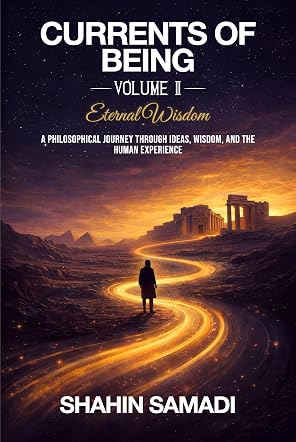
Volume I is where we come from. This book is what I have learned along the way.
I was born in Tehran and left in 1976, at fifteen, to attend college in the United States. By the time I understood that I would not be going back, the country I knew no longer existed. I built a life here instead: a doctorate in computer science, years of work with NASA, NOAA and the Department of Defense, teaching, and a company I co-founded in 2003.
What I did not expect was how much of that life would keep returning to the same handful of questions. How do you carry a place you cannot go back to? What do you owe the people who come after you? What is worth spending a life on?
I wrote Eternal Wisdom for the next generation, and for my own children and grandchildren most of all. I chose the topics that seemed to me to matter most. I say honestly what I have come to think and how I arrived there, and then I stop. I am not trying to settle these questions for anyone. I would rather a reader finish a chapter and disagree with me having thought it through than agree with me having taken my word for it.
That is the whole of what I have to offer: one life, examined out loud, and left open.
Reviewed by Robert Collier III for Readers' Favorite
Shahin Samadi’s Currents of Being (Volume II) is a thoughtful exploration of deep philosophical ideas, personal connections, and the shared human journey. Using a striking river metaphor from his youth as a foundation, the book examines how our lifelong growth is directly shaped by our decisions and the cultural terrains we encounter. The text smoothly blends classic Persian literature, like Rumi’s parables and Saadi’s poetry, with deep looks into how civilizations rise and fall and how our environment is changing today. He even connects crucial global issues like water disputes and modern migration to show that human nature hasn’t changed all that much throughout history. Whether he’s exploring new advances in technology or using an orchestra analogy to show how teams should work together, he gives you a clear, structured guide to finding internal mindfulness. He offers a profound look at how life experiences slowly turn everyday knowledge into real, lasting wisdom.
At its heart, Shahin Samadi’s Currents of Being (Volume II) is an inspiring guide that captures why we should never stop learning. Samadi shares some fascinating insights into how societies change, especially when he compares post-1979 Iran with post-communist Russia to show how power dynamics tend to repeat themselves over time. There is a real, heartfelt sincerity in the way he ties complex ideas like quantum concepts and tech eras right back to our everyday lives, reminding us that our human skills are still our best tools. His chapter on sensory mindfulness as a cure for digital burnout is a much-needed reminder to unplug, look around, and protect our cognitive health in a world that never switches off. Furthermore, by separating personal faith from strict organized religion, he creates a welcoming space for anyone to reflect on basic ethics like good thoughts, good words, and good deeds. If you want a thoughtful, steady compass to help you make sense of today’s fast-paced world, you’ll find this book to be a beautifully written, eye-opening companion.