


















This author participates in the Readers' Favorite Free Book Program, which is open to all readers and is completely free. The author will provide you with a free copy of their book in exchange for an honest review. You and the author will discuss what sites you will post your review to and what kind of copy of the book you would like to receive (eBook, PDF, Word, paperback, etc.). To begin, click the purple email icon to send this author a private email.
This author participates in the Readers' Favorite Book Review Exchange Program, which is open to all authors and is completely free. Simply put, you agree to provide an honest review an author's book in exchange for the author doing the same for you. What sites your reviews are posted on (B&N, Amazon, etc.) and whether you send digital (eBook, PDF, Word, etc.) or hard copies of your books to each other for review is up to you. To begin, click the purple email icon to send this author a private email, and be sure to describe your book or include a link to your Readers' Favorite review page or Amazon page.
This author participates in the Readers' Favorite Book Donation Program, which was created to help nonprofit and charitable organizations (schools, libraries, convalescent homes, soldier donation programs, etc.) by providing them with free books and to help authors garner more exposure for their work. This author is willing to donate free copies of their book in exchange for reviews (if circumstances allow) and the knowledge that their book is being read and enjoyed. To begin, click the purple email icon to send this author a private email. Be sure to tell the author who you are, what organization you are with, how many books you need, how they will be used, and the number of reviews, if any, you would be able to provide.

Reviewed by Carine Engelbrecht for Readers' Favorite
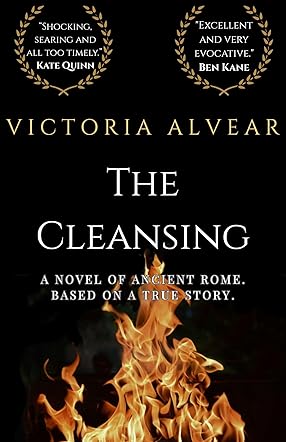
To the ancient Romans, Vestal virgins represented the very personification of feminine purity. But when one of their number is accused of sex with a man, scandal erupts. In a city dealing with the aftermath of a crushing defeat against Hannibal's army, this shocking revelation demands punishment. In a world where the divine calm of the near-stoic Vestal virgins is a wafer-thin barrier against the volatile superstitions of the general populace, the youthful Opimia Pansa seems like a convenient scapegoat. But when Mia, the accused, learns of a ruthless conspiracy behind her accusation, she demands the right to defend herself. The Cleansing by Victoria Alvear tells a fictionalized version of this real historical figure's story in a tense courtroom drama set in ancient Rome during the Republican period.
The setting is alien to our perception, but also strangely relatable. The manipulation of belief and rumor finds a powerful echo in the present-day influence of social media. As in our world, there is a continuum from belief to skepticism that brings the inner worlds of several key characters to life, making them so much more than caricatures of history. But the theme that permeates everything is the role of women. In The Cleansing, Victoria Alvear tracks the degrees of disempowerment between a wife and a priestess, and between women and men. It compares the scrutiny to which all women are subject against the ease with which a man can shrug off accountability for crimes or falsehoods and shows how the powerful can gaslight society with impunity. Mia is a likable heroine whose story is authentic. At times, the suspense is truly nail-biting. At the back of the book, there is a detailed appendix that puts the story in its historical context.