










This author participates in the Readers' Favorite Free Book Program, which is open to all readers and is completely free. The author will provide you with a free copy of their book in exchange for an honest review. You and the author will discuss what sites you will post your review to and what kind of copy of the book you would like to receive (eBook, PDF, Word, paperback, etc.). To begin, click the purple email icon to send this author a private email.
This author participates in the Readers' Favorite Book Review Exchange Program, which is open to all authors and is completely free. Simply put, you agree to provide an honest review an author's book in exchange for the author doing the same for you. What sites your reviews are posted on (B&N, Amazon, etc.) and whether you send digital (eBook, PDF, Word, etc.) or hard copies of your books to each other for review is up to you. To begin, click the purple email icon to send this author a private email, and be sure to describe your book or include a link to your Readers' Favorite review page or Amazon page.
This author participates in the Readers' Favorite Book Donation Program, which was created to help nonprofit and charitable organizations (schools, libraries, convalescent homes, soldier donation programs, etc.) by providing them with free books and to help authors garner more exposure for their work. This author is willing to donate free copies of their book in exchange for reviews (if circumstances allow) and the knowledge that their book is being read and enjoyed. To begin, click the purple email icon to send this author a private email. Be sure to tell the author who you are, what organization you are with, how many books you need, how they will be used, and the number of reviews, if any, you would be able to provide.
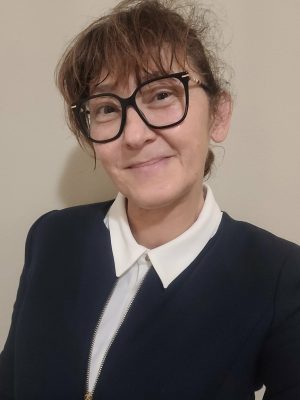
Mariela G. George was born in Burgas, Bulgaria, and has dedicated her life to the pursuit of justice, human dignity, and storytelling. She holds degrees in Sociology (Sofia University), Criminal Justice (University of Houston), and Business Administration (University of Phoenix), and served in the U.S. Army before working as a domestic violence investigator and youth mentor in Houston.
Her adult-fiction debut, The Faces of unBorn Butterflies, was first published in Bulgaria with financial support from the Bulgarian Ministry of Culture after winning a national literary contest, and a theater in Sofia is currently developing a stage adaptation based on the novel. She is also the author of award-winning children’s books recognized with the Readers’ Favorite five-star distinction.
Mariela continues to write stories inspired by lived experience, focusing on resilience, trauma, and the human search for meaning.
Reviewed by Ibrahim Aslan for Readers' Favorite
If you’re looking for a book that makes you think and feel at the same time, The Paradox of Pain by Mariela G. George is definitely it. Be prepared for a book that doesn’t just tell you about suffering—it makes you question it deeply while doing some self-reflection of your own. Mariela dives straight into her life, which consists of trauma, adjusting to life in a new country, and even near-trafficking. She shows us how those experiences shaped her identity, but she does it in a way that’s honest and relatable. What I really connected with is how she frames pain as more than something to survive. It's a beckoning call from God, an opportunity to notice grace in tiny ways, and a doorway to growth, trust, and hope. I love her reflections on God as 'The God Who Sees' and 'The God Who Bleeds.' It is comforting to think of a God who really steps into human suffering—not from a distance but shoulder-to-shoulder with us.
One of my favorite parts is how the author talks about 'mirrors' and the ways society interacts with pain—we often tend to bury or ignore it. Her stories contain ordinary, human acts of mercy, like strangers offering her aid or moments when she senses divine guidance through dreams. She balances these moments with deeper revelations. She also explores spiritual and philosophical questions in a very approachable way. I love her interpretation of personal truth versus God’s absolute truth. It makes me think about God’s authority in the grander scheme of things. The way she alternates between the Bible, her own experiences, and crucial historical events drew me deeper into the book. By the time I finished reading it, I was inspired to revisit my own struggles and see them from a different angle. We are encouraged to see pain not as something to hide from, but as something that can transform us all. Mariela G. George’s The Paradox of Pain will challenge you, comfort you, and make you notice grace in the cracks of life. I can see myself returning to it again when life throws its challenges my way.