




This author participates in the Readers' Favorite Free Book Program, which is open to all readers and is completely free. The author will provide you with a free copy of their book in exchange for an honest review. You and the author will discuss what sites you will post your review to and what kind of copy of the book you would like to receive (eBook, PDF, Word, paperback, etc.). To begin, click the purple email icon to send this author a private email.
This author participates in the Readers' Favorite Book Review Exchange Program, which is open to all authors and is completely free. Simply put, you agree to provide an honest review an author's book in exchange for the author doing the same for you. What sites your reviews are posted on (B&N, Amazon, etc.) and whether you send digital (eBook, PDF, Word, etc.) or hard copies of your books to each other for review is up to you. To begin, click the purple email icon to send this author a private email, and be sure to describe your book or include a link to your Readers' Favorite review page or Amazon page.
This author participates in the Readers' Favorite Book Donation Program, which was created to help nonprofit and charitable organizations (schools, libraries, convalescent homes, soldier donation programs, etc.) by providing them with free books and to help authors garner more exposure for their work. This author is willing to donate free copies of their book in exchange for reviews (if circumstances allow) and the knowledge that their book is being read and enjoyed. To begin, click the purple email icon to send this author a private email. Be sure to tell the author who you are, what organization you are with, how many books you need, how they will be used, and the number of reviews, if any, you would be able to provide.
Reviewed by Jamie Michele for Readers' Favorite
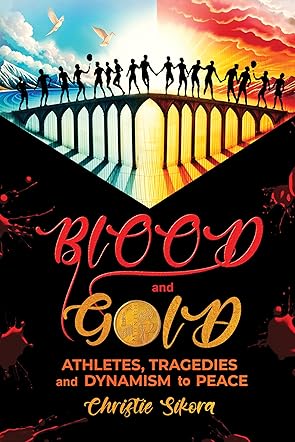
In Blood and Gold, Christie Sikora makes the argument that the Munich Olympics are proof that political violence cannot be separated from history. The author says the hostage crisis grew from decades of Palestinian displacement after 1948, from Cold War rivalries, from Western intervention across the Middle East, and from West Germany’s attempt to present itself as peaceful after Nazism. Sikora believes Munich officials valued the appearance of openness so strongly that they ignored repeated warnings about possible attacks. The author also says governments frequently use selective language when describing violence, especially during conflicts involving Israel and Palestine. Sikora presents media coverage as a force that shaped public sympathy while reducing Palestinian grievances into a narrow image of terrorism. Throughout the book, Sikora returns to the argument that retaliation creates continuing bloodshed because each attack produces another demand for revenge. The final argument says lasting peace requires historical acknowledgment alongside equal human recognition for both Palestinians and Israelis.
In Christie Sikora’s Blood and Gold, the title points toward the exchange of human lives for political power, military expansion, and national ambition surrounding Munich, Palestine, and the decades that followed. The book arrives at a moment when arguments over civilian deaths in Gaza have spread through university campuses across North America, while public debate surrounding military aid packages continues inside the United States Congress, giving the examination of media framing and state violence unusual relevance. The conversationally academic style explains intelligence operations, Olympic politics, and Palestinian history through direct language that suits readers approaching the subject for the first time, while still offering substantial historical detail for readers already familiar with Middle Eastern affairs. I was really impressed by Sikora's “Dynamism to Peace,” which stands apart through its call for trauma healing, educational reform, refugee restitution under United Nations Resolution 194, and dialogue built around mutual recognition. Readers interested in political history, modern warfare, journalism, or books by Robert Fisk would appreciate this work.