















This author participates in the Readers' Favorite Free Book Program, which is open to all readers and is completely free. The author will provide you with a free copy of their book in exchange for an honest review. You and the author will discuss what sites you will post your review to and what kind of copy of the book you would like to receive (eBook, PDF, Word, paperback, etc.). To begin, click the purple email icon to send this author a private email.
This author participates in the Readers' Favorite Book Review Exchange Program, which is open to all authors and is completely free. Simply put, you agree to provide an honest review an author's book in exchange for the author doing the same for you. What sites your reviews are posted on (B&N, Amazon, etc.) and whether you send digital (eBook, PDF, Word, etc.) or hard copies of your books to each other for review is up to you. To begin, click the purple email icon to send this author a private email, and be sure to describe your book or include a link to your Readers' Favorite review page or Amazon page.
This author participates in the Readers' Favorite Book Donation Program, which was created to help nonprofit and charitable organizations (schools, libraries, convalescent homes, soldier donation programs, etc.) by providing them with free books and to help authors garner more exposure for their work. This author is willing to donate free copies of their book in exchange for reviews (if circumstances allow) and the knowledge that their book is being read and enjoyed. To begin, click the purple email icon to send this author a private email. Be sure to tell the author who you are, what organization you are with, how many books you need, how they will be used, and the number of reviews, if any, you would be able to provide.
Reviewed by Asher Syed for Readers' Favorite
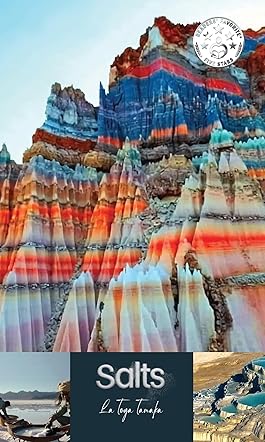
Salts by La Toya Tanaka introduces salt as matter that begins in an electron transfer and grows into a force that shapes physiology, settlement, authority, belief, and technology. Tanaka shows how a simple bond dissolves into charged particles that move through organs and guide essential transport. She follows this motion into early extraction sites where steady access determines survival and directs the growth of towns. She then examines periods in which rulers use the control of salt and trade corridors to secure revenue and extend influence. Her study turns to healing practices in which measured mixtures support care and older traditions treat mineral balance as a marker of internal order. Tanaka concludes with modern research in which heated salts hold energy, steady experimental reactors, and support new storage methods that alter industrial planning.
Salts by La Toya Tanaka earns respect through the force of its documented reasoning, demonstrated through cases that show how concrete decisions produced lasting outcomes. Her examination of the Kanawha producers is especially strong, since she uses their deliberate market flooding to show how coordinated pricing reshaped local production and pushed small operations out, giving the reader a clear line from action to consequence. Tanaka applies the same standard to political authority by tracing how the British Salt Act shaped daily conditions and set the stage for the 1930 march, presenting the event through records that show economic impact rather than relying on spectacle. The book’s power comes from this consistent use of direct evidence, which gives each chapter a firm internal logic and shows how control of a basic mineral shaped public life across varied eras.