








This author participates in the Readers' Favorite Free Book Program, which is open to all readers and is completely free. The author will provide you with a free copy of their book in exchange for an honest review. You and the author will discuss what sites you will post your review to and what kind of copy of the book you would like to receive (eBook, PDF, Word, paperback, etc.). To begin, click the purple email icon to send this author a private email.
This author participates in the Readers' Favorite Book Review Exchange Program, which is open to all authors and is completely free. Simply put, you agree to provide an honest review an author's book in exchange for the author doing the same for you. What sites your reviews are posted on (B&N, Amazon, etc.) and whether you send digital (eBook, PDF, Word, etc.) or hard copies of your books to each other for review is up to you. To begin, click the purple email icon to send this author a private email, and be sure to describe your book or include a link to your Readers' Favorite review page or Amazon page.
This author participates in the Readers' Favorite Book Donation Program, which was created to help nonprofit and charitable organizations (schools, libraries, convalescent homes, soldier donation programs, etc.) by providing them with free books and to help authors garner more exposure for their work. This author is willing to donate free copies of their book in exchange for reviews (if circumstances allow) and the knowledge that their book is being read and enjoyed. To begin, click the purple email icon to send this author a private email. Be sure to tell the author who you are, what organization you are with, how many books you need, how they will be used, and the number of reviews, if any, you would be able to provide.
Reviewed by Asher Syed for Readers' Favorite
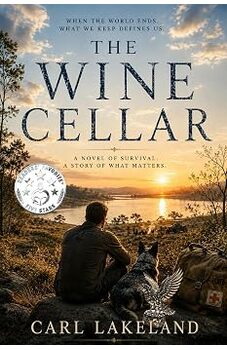
Carl Lakeland’s The Wine Cellar follows Michael Dodd, a Canberra homeowner whose concern over a Middle East crisis grows when fuel supplies tighten as financial markets behave strangely. Australian officials urge people to remain calm, yet Michael begins converting the space beneath his Deakin garage into a reinforced shelter disguised as a wine cellar. His wife, Charlotte, questions the scale of his preparations as supplies began filling the room. At the same time, intelligence analyst Scott Thompson watches military communications shift across several nuclear powers from Pine Gap near Alice Springs. Although each country has its own reason to be wary, the movements begin happening close together. With reassurance coming from officials as Michael keeps finding reasons to prepare, he races to finish the cellar before the changing situation decides whether his fears were justified.
Carl Lakeland’s The Wine Cellar is outstanding nuclear survival dystopian fiction, with smart survival detail giving Canberra’s crisis an everyday reality. The author understands exactly how people behave when the rules of ordinary life suddenly change, which gives each decision a convincing human logic. Charlotte trading her gold nugget necklace for a Geiger counter is a perfect example, showing how quickly value can be rewritten once survival takes over. Michael Dodd is just as convincing. His methodical instinct for measuring risk gives the scientific material a natural place in the story, especially at an evacuation camp where a test of bottled water exposes radioactive contamination in the supply. The author gets this right: dystopia stops feeling abstract once ordinary people must live inside its reach. Readers drawn to intelligent fiction with intensely driven prose, grounded in credible survival detail, are in for a treat. Very highly recommended.