



















This author participates in the Readers' Favorite Free Book Program, which is open to all readers and is completely free. The author will provide you with a free copy of their book in exchange for an honest review. You and the author will discuss what sites you will post your review to and what kind of copy of the book you would like to receive (eBook, PDF, Word, paperback, etc.). To begin, click the purple email icon to send this author a private email.
This author participates in the Readers' Favorite Book Review Exchange Program, which is open to all authors and is completely free. Simply put, you agree to provide an honest review an author's book in exchange for the author doing the same for you. What sites your reviews are posted on (B&N, Amazon, etc.) and whether you send digital (eBook, PDF, Word, etc.) or hard copies of your books to each other for review is up to you. To begin, click the purple email icon to send this author a private email, and be sure to describe your book or include a link to your Readers' Favorite review page or Amazon page.
This author participates in the Readers' Favorite Book Donation Program, which was created to help nonprofit and charitable organizations (schools, libraries, convalescent homes, soldier donation programs, etc.) by providing them with free books and to help authors garner more exposure for their work. This author is willing to donate free copies of their book in exchange for reviews (if circumstances allow) and the knowledge that their book is being read and enjoyed. To begin, click the purple email icon to send this author a private email. Be sure to tell the author who you are, what organization you are with, how many books you need, how they will be used, and the number of reviews, if any, you would be able to provide.
Reviewed by Jamie Michele for Readers' Favorite
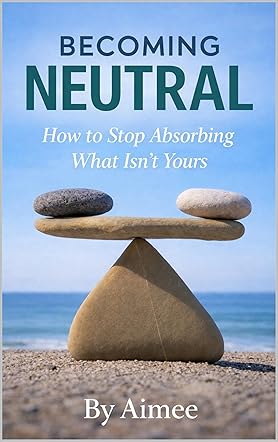
Becoming Neutral examines what happens when a person stops absorbing every emotional reaction and starts protecting their sense of self. Easier said than done, but author Aimee Eppleston gets us there. She talks about neutrality as a deliberate practice linked to awareness, boundaries, and emotional steadiness, arguing that empathy does not require self-abandonment and that constant emotional absorption can slowly disconnect people from the present moment. Through personal reflection paired with practical guidance, the author describes how pauses create space between emotion and response, giving people the ability to remain connected during conflict while still protecting their inner stability. Becoming Neutral presents neutrality as an internal position built through repetition and attention, where emotional reactions are acknowledged briefly before being released instead of carried forward. The book ultimately frames neutrality as a way of remaining emotionally present in difficult moments while refusing to surrender control of your inner state to somebody else’s chaos.
Becoming Neutral works because Aimee Eppleston understands how quickly emotion spreads between people in families, workplaces, and close relationships. One person’s panic can change an entire conversation, and the author examines what happens when people begin carrying feelings that did not begin with them. The book treats neutrality not as emotional distance but as the ability to remain present during conflict without becoming consumed by somebody else’s reaction. What gives the guide practical value is Eppleston’s attention toward recognizable behavior. Her discussion about pausing before answering criticism explains how arguments often escalate through reflex instead of intention. Her approach toward releasing emotion after conflict presents feelings as temporary experiences moving through the body instead of permanent identity. Eppleston writes from observation instead of abstraction, which makes the book especially useful for parents, caregivers, and people working in emotionally demanding environments.