














Dignity


Fiction - Literary
Kindle Edition
Reviewed on 07/29/2026
Buy on Amazon

This author participates in the Readers' Favorite Free Book Program, which is open to all readers and is completely free. The author will provide you with a free copy of their book in exchange for an honest review. You and the author will discuss what sites you will post your review to and what kind of copy of the book you would like to receive (eBook, PDF, Word, paperback, etc.). To begin, click the purple email icon to send this author a private email.

This author participates in the Readers' Favorite Book Review Exchange Program, which is open to all authors and is completely free. Simply put, you agree to provide an honest review an author's book in exchange for the author doing the same for you. What sites your reviews are posted on (B&N, Amazon, etc.) and whether you send digital (eBook, PDF, Word, etc.) or hard copies of your books to each other for review is up to you. To begin, click the purple email icon to send this author a private email, and be sure to describe your book or include a link to your Readers' Favorite review page or Amazon page.

This author participates in the Readers' Favorite Book Donation Program, which was created to help nonprofit and charitable organizations (schools, libraries, convalescent homes, soldier donation programs, etc.) by providing them with free books and to help authors garner more exposure for their work. This author is willing to donate free copies of their book in exchange for reviews (if circumstances allow) and the knowledge that their book is being read and enjoyed. To begin, click the purple email icon to send this author a private email. Be sure to tell the author who you are, what organization you are with, how many books you need, how they will be used, and the number of reviews, if any, you would be able to provide.

    Book Review

Reviewed by Asher Syed for Readers' Favorite

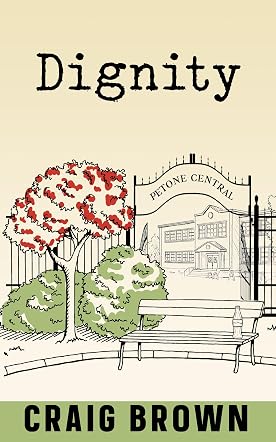
Craig Brown’s Dignity follows an unnamed boy in Petone, New Zealand, who first approaches Malcolm Beaumont, the council binman everyone calls Bogie, after classmates dare him to steal the man’s Coke. What begins as a childish test turns into an unlikely attachment, formed on a school bench and later along the Hutt River, where Bogie’s silence says as much as other people’s cruelty. The boy’s friendship with Katie Parata grows beside his loyalty to Bogie, while Willy Simmonds’s bullying keeps reminding him how easily a crowd can make cruelty ordinary. When Bogie’s private dream of owning a sailing boat reappears through an old yacht called Bit by Bit, the boy begins to understand that the town’s most dismissed man has a life no one bothered to see.

“With the sun beginning its descent over the horizon, he wrote out the card, addressed to a boy whose name he found he didn’t know...” It's true, the boy, who is the first-person narrator, is never named in Craig Brown’s Dignity. I actually found this to be the perfect capping on Brown's brilliant literary work, in which the author takes a methodical and calculated approach in allowing the story's biggest changes to arrive quietly. The writing is gorgeous, and the visual prose breathes life into Petone’s streets and around Wellington harbor, where repaired boats slip onto the water, and the children sit barefoot on the foredeck. The best part is Bogie. Brown fleshes him out as a man with few words but enormous inward life, something we see after a fire licks through and leaves only burnt timber. The narrator is excellent because he's imperfect, and his mistakes still feel authentic. The fist-pump moment is when we see how the word dignity is really used. Readers who connected with the tender human dignity of A Man Called Ove and the bruised coming-of-age memory of The Body are in for a treat with Dignity.

Alija Turkovic

In Craig Brown’s Dignity, a young narrator navigates the typical minefield of growing up in a working-class New Zealand community. His life takes a unique turn when he forms a bond with Malcolm, a local street sweeper whom everyone calls Bogie. While the rest of the town largely looks down on or ignores this reticent man, the young boy finds a sense of safety and shelter sitting beside him on a park bench. Bogie has a deep, long-held dream involving a boat and years of painstakingly collected bottle money. When a sudden roadblock threatens to crush that vision, a neighborhood girl challenges the boy to help salvage the old man’s dream. Will he succeed in working along with his peers to help Bogie secure a vessel while simultaneously surviving his own hurdles with bullying, young love, family issues, and growing up?

Dignity by Craig Brown is a compelling literary novel that captures a quiet slice of life with exceptional emotional resonance. The book builds the bond between the boy and the street sweeper at a realistic pace. I liked that the conversations are full of meaningful pauses instead of long, fake orations that nobody would actually say. The 1980s New Zealand setting feels spot on, making the school playground drama and the cold harbor air feel incredibly real. It’s an emotional look at sticking by someone and falling in love for the first time without coming across as clichéd. Finding out how much the boy depends on his friendship with Bogie to survive the challenges of being a teenager is the most heartfelt moment of all. The timing fits the slow, methodical way the characters live their lives, so every win feels justified. You end up finishing the book with a real soft spot for the people in society who usually get ignored. Very highly recommended.

David Jaggart

Dignity by Craig Brown introduces us to an eleven-year-old boy trying to survive the daily hazards of a New Zealand schoolyard in the mid-1980s. His lonely world changes when he makes an unexpected connection with Malcolm Dean Beaumont, a quiet council street sweeper whom the local townspeople call Bogie. This isolated schoolboy finds a regular haven from his peers simply by joining the silent, limping ex-navy man on a wooden seat outside Petone Central during their daily lunchtime routine. Soon, the boy learns about the street sweeper’s hidden habit of hoarding small change from discarded glass bottles to finance his ultimate goal of obtaining a sailboat. When a sudden obstacle puts that entire plan in jeopardy, a confident classmate named Katie Parata motivates the boy to take action on behalf of his companion. Can our young protagonist withstand intimidating encounters with Willy Simmonds and handle the anxieties of early romance while helping the veteran obtain a boat?

Craig Brown’s Dignity is a beautifully written story that stands out for the little details about how a small town actually works. Brown doesn’t hurry the plot along, choosing instead to focus on the daily life of Petone and the unwritten laws of honor and family discipline that characters like Rangi Simmonds live by. It was fascinating to read about the physical effort needed to rebuild that old boat in the Marine Parade shed, since using the proper sailing terms makes the 1980s setting feel very authentic. You really get a sense of how tough early adolescence can be, and it makes sense that a sensitive boy would look for a way to escape schoolyard bullies by throwing himself into a big hands-on project. Because Brown writes in such an unhurried style, the final moment carries a ton of emotional weight. Overall, this story offers a heartfelt look at community ties that reminds us to appreciate the fascinating people we sometimes tend to overlook. Great read.

Richard Prause

Dignity by Craig Brown observes a socially awkward 11-year-old child narrator as he charts the difficult trials of adolescence in New Zealand in the 1980s. Wanting an escape from a cruel classmate named Willy, the schoolboy establishes a comforting habit of sitting with Malcolm, a reserved street sweeper, who is also nicknamed Bogie. A quiet partnership develops on a park seat, built around a deep understanding and lengthy pauses rather than spoken words. The boy eventually learns about Bogie’s ambition to acquire a sailboat, financed entirely by redeeming glass containers at the post office over many years. When the sudden closure of a business shatters those expectations and leaves Bogie disheartened, a resourceful girl named Katie prompts the boy to track down a forgotten boat owned by a short-tempered older veteran named Arthur Montgomery. Can this young boy protect his meaningful connection with the worker while avoiding threats from Willy and his regular group?

Dignity by Craig Brown is a wonderful piece of fiction that shines for its fantastic, rich surroundings. Brown transports you straight to that New Zealand estuary, making the local tavern and the old boat sheds feel just as alive as any of the people in the town. What hit me hardest was how much you end up caring about these characters, which makes you realize how much worth there is in people who live quietly on the margins of a small community. I loved how natural the dialogue feels, since it perfectly captures the simple way teenagers and a quiet man express themselves without adding any artificial theatrics. Brown matches the speed of his storytelling to the actual rhythm of these people’s lives, letting the friction of the school rivalries, Willy’s scary father (Rangi), and the work on the boat build up naturally over time. This book is a deeply moving experience that stays with you till the very end. Highly recommended.

Romuald Dzemo

Dignity by Craig Brown is set in a small New Zealand harbor town in the 1980s and follows the life of Malcolm “Bogie” Beaumont, who is tired of his life and wants a way out. Bogie is the street sweeper that nobody seems to pay attention to. He is determined to raise money to buy a sailboat. So, he collects empty bottles and charges four and eight cents at a time. The young narrator becomes his friend, and while he supports Bogie’s dream, he faces challenges in school; he is bullied. He gets into schoolyard fights and experiences first love with Katie Parata. When an arsonist burns the boatshed housing the boat that Bogie has set his eyes on, what becomes of his dreams, and how does a young boy with a lot to deal with at school help?

Dignity is one of those emotionally gripping stories you stumble on once in a while. It inspires sympathy, especially for Bogie, and I found myself rooting for him, cheering his every effort, and wanting him to succeed. The bullying at school and its effects on the young narrator are one of the major themes of this engaging story. But what gives it heart is the relationship between the narrator and Bogie; it is the perfect portrait of a bond between a perceptive youngster and a taciturn, quietly heroic, and self-sufficient older person. The book can also be read as a coming-of-age story that examines friendship. What struck me most was how Bogie’s efforts inspire the narrator, giving him the strength to face his troubles with courage and equanimity. The prose is elegant and the narrative voice irresistible. The pacing is unhurried, reflecting Bogie's temperament, while drawing you into his inner world. Craig Brown’s book is a spellbinding story about the dignity of unseen and unappreciated working lives.