



This author participates in the Readers' Favorite Free Book Program, which is open to all readers and is completely free. The author will provide you with a free copy of their book in exchange for an honest review. You and the author will discuss what sites you will post your review to and what kind of copy of the book you would like to receive (eBook, PDF, Word, paperback, etc.). To begin, click the purple email icon to send this author a private email.
This author participates in the Readers' Favorite Book Donation Program, which was created to help nonprofit and charitable organizations (schools, libraries, convalescent homes, soldier donation programs, etc.) by providing them with free books and to help authors garner more exposure for their work. This author is willing to donate free copies of their book in exchange for reviews (if circumstances allow) and the knowledge that their book is being read and enjoyed. To begin, click the purple email icon to send this author a private email. Be sure to tell the author who you are, what organization you are with, how many books you need, how they will be used, and the number of reviews, if any, you would be able to provide.
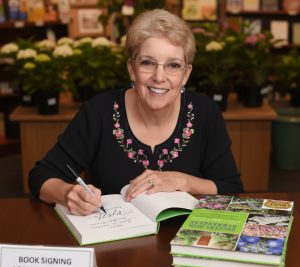
I am a confirmed plantaholic and write and speak to anyone who will listen about plants and horticulture. Along those lines, I am an in-demand national speaker on a number of garden-related topics, as well as an instructor at the New York Botanical Garden, where I am regarded as the resident hydrangea expert. My writing includes a free award-winning hydrangea blog as well as a variety of articles for horticultural publications. Both my hydrangea books are Amazon bestsellers in their respective non-fiction categories and international award winners.
Reviewed by Asher Syed for Readers' Favorite
Pruning a hydrangea begins long before the first cut, because the shrub’s identity determines where its next flowers are forming. Lorraine B. Ballato's Hydrangea Pruning guides readers from identification to the appropriate pruning moment, explaining how buds on last year’s stems follow a different calendar from flowers produced on current growth. Once that distinction is understood, the plant becomes a record of the season, with each stem revealing whether a cut will preserve future flowering. The same principle shapes every decision that follows, since a healthy hydrangea may need little intervention while an overgrown specimen can be renewed gradually according to its natural cycle. By connecting pruning time to flower development, Hydrangea Pruning gives gardeners a working method for approaching any hydrangea before the pruners touch its stems.
In Hydrangea Pruning, Lorraine B. Ballato turns horticultural knowledge into an inviting lesson shaped by decades of observation. Her discussion of apical dominance captures the quality of her teaching, since the movement of auxin through a reblooming hydrangea gives deadheading an intelligible rationale tied to another flush of flowers. She uses a conversational tone to make that science accessible in language a gardener can recall upon entering the garden. Her reading of the Royal Horticultural Society panicle trial shows how she treats published research as a starting point for local observation. Her guidance has the feel of an apprenticeship with a gardener whose long practice has refined the way technical instruction reaches the reader. This a practical guide that gives hydrangea enthusiasts an informed companion for many seasons spent among their plants.