
















This author participates in the Readers' Favorite Free Book Program, which is open to all readers and is completely free. The author will provide you with a free copy of their book in exchange for an honest review. You and the author will discuss what sites you will post your review to and what kind of copy of the book you would like to receive (eBook, PDF, Word, paperback, etc.). To begin, click the purple email icon to send this author a private email.
This author participates in the Readers' Favorite Book Review Exchange Program, which is open to all authors and is completely free. Simply put, you agree to provide an honest review an author's book in exchange for the author doing the same for you. What sites your reviews are posted on (B&N, Amazon, etc.) and whether you send digital (eBook, PDF, Word, etc.) or hard copies of your books to each other for review is up to you. To begin, click the purple email icon to send this author a private email, and be sure to describe your book or include a link to your Readers' Favorite review page or Amazon page.
This author participates in the Readers' Favorite Book Donation Program, which was created to help nonprofit and charitable organizations (schools, libraries, convalescent homes, soldier donation programs, etc.) by providing them with free books and to help authors garner more exposure for their work. This author is willing to donate free copies of their book in exchange for reviews (if circumstances allow) and the knowledge that their book is being read and enjoyed. To begin, click the purple email icon to send this author a private email. Be sure to tell the author who you are, what organization you are with, how many books you need, how they will be used, and the number of reviews, if any, you would be able to provide.
Reviewed by Gabriel Santos for Readers' Favorite
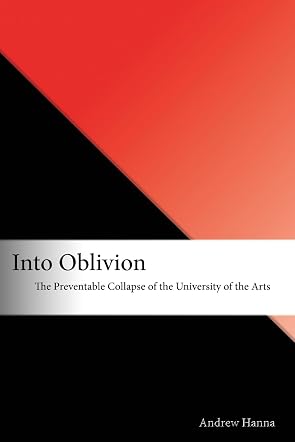
The University of the Arts (UArts) in Philadelphia, Pennsylvania, closed its doors for good in June 2024. This should be surprising enough, given the institution’s 150-year history, but the sudden closure announcement just a few months earlier made things even more shocking. The administrators alluded to an unforeseen financial crisis as the cause, but was that really the case? In Into Oblivion, Andrew Hanna investigates financial records, metrics, lawsuits, and other evidence to get a clearer, broader picture of UArts’ collapse. The book argues that, far from sudden or unforeseen, this crisis traces back to at least 2009, and systemic failures turned a solvable problem into a ticking time bomb.
This is a rigorous analysis, but don’t let all the numbers daunt you. Everything is explained in plain language, and you’ll find plenty of graphs to understand trends and patterns visually. Andrew Hanna’s ability to wrestle with tons of disparate data, derive insights, turn these insights into easily digestible information, and guide the reader along a logical, step-by-step journey is nothing short of awe-inspiring. If you want to see what great data storytelling looks like, Into Oblivion is an instructive example. The book offers valuable takeaways for not only higher learning institutions but also organizations in general. It highlights the signs and negative consequences of institutional inbreeding, the cost of missing opportunities, the dangers of a lack of transparency and accountability, and, generally, what happens when you don’t deal with systemic issues properly.