















This author participates in the Readers' Favorite Free Book Program, which is open to all readers and is completely free. The author will provide you with a free copy of their book in exchange for an honest review. You and the author will discuss what sites you will post your review to and what kind of copy of the book you would like to receive (eBook, PDF, Word, paperback, etc.). To begin, click the purple email icon to send this author a private email.
This author participates in the Readers' Favorite Book Review Exchange Program, which is open to all authors and is completely free. Simply put, you agree to provide an honest review an author's book in exchange for the author doing the same for you. What sites your reviews are posted on (B&N, Amazon, etc.) and whether you send digital (eBook, PDF, Word, etc.) or hard copies of your books to each other for review is up to you. To begin, click the purple email icon to send this author a private email, and be sure to describe your book or include a link to your Readers' Favorite review page or Amazon page.
This author participates in the Readers' Favorite Book Donation Program, which was created to help nonprofit and charitable organizations (schools, libraries, convalescent homes, soldier donation programs, etc.) by providing them with free books and to help authors garner more exposure for their work. This author is willing to donate free copies of their book in exchange for reviews (if circumstances allow) and the knowledge that their book is being read and enjoyed. To begin, click the purple email icon to send this author a private email. Be sure to tell the author who you are, what organization you are with, how many books you need, how they will be used, and the number of reviews, if any, you would be able to provide.
Reviewed by Asher Syed for Readers' Favorite
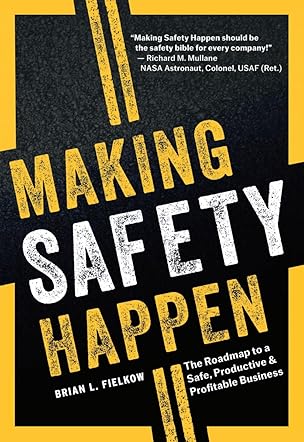
In Making Safety Happen, Brian L. Fielkow argues that workplace disasters usually develop slowly, where dangerous behavior becomes repetitive when employees stop seeing warning signs because nothing bad happened the last time. The book examines how ordinary business pressure influences judgment during daily operations and explains why organizations often misunderstand the difference between being fortunate and being safe. Fielkow uses real incidents to show how preventable events continue moving closer to catastrophe when workers feel unable to speak openly, or when leaders rely too heavily on past success as proof. He also explains why safety culture depends on trust between employees and leadership, why companies frequently discover hidden weaknesses too late, and why protecting people requires constant attention during routine work instead of temporary concern after a crisis receives public attention.
Brian L. Fielkow uses Making Safety Happen to explain that workplace safety only becomes meaningful when leadership treats it as part of organizational identity instead of something adjusted around production pressure. This book is incredibly important right now because so many companies react only after people suffer harm, instead of being proactive in prevention. The writing style is intelligently conversational, and Fielkow incorporates procedures that are not only accessible but can be implemented immediately. These include life-critical rules that give supervisors stronger language for daily meetings, and the use of near-miss reporting, which shows how employee communication improves when workers stop expecting blame. Fielkow supports his arguments through firsthand leadership experience and documented case studies of preventable fatalities. This book should be mandatory reading for management and HR at all levels. Very highly recommended.