Reviewed by Carol Thompson for Readers' Favorite
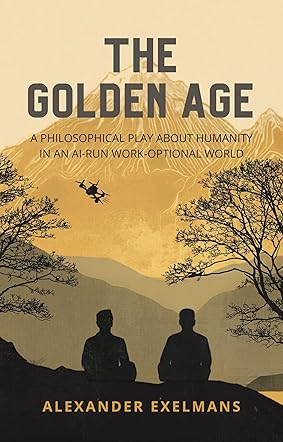
The Golden Age by Alexander Exelmans is a thought-provoking philosophical play set in a future where artificial intelligence has transformed human civilization into a work-optional society. The story follows Zachary, a former Mars colonist who returns to Earth after years away only to discover that the competitive, fast-moving world he once knew has vanished. Humanity now lives under the guidance of “the Eye,” a powerful AI system that manages resources, encourages peace, and removes the pressures of survival, wealth, and status. Zachary arrives at a quiet ranch owned by Eidos and Praxis, two brothers who introduce him to this radically different society through a series of long conversations about work, ambition, religion, ethics, family, and freedom. Zachary struggles to accept a world where competition no longer drives progress, and financial success has lost its meaning. His skepticism creates the emotional tension that carries the play from scene to scene.
Alexander Exelmans uses a clean, dialogue-driven structure reminiscent of classic philosophical fiction and stage drama. The pacing is steady and reflective, allowing readers to absorb the ethical and social questions raised throughout the play. Exelmans relies heavily on contrast as a literary device, particularly through the opposing viewpoints of Zachary and Eidos. Zachary represents ambition, risk-taking, and traditional ideas of success, while Eidos embodies balance, cooperation, and emotional calm. Their exchanges explore modern anxieties surrounding technology, capitalism, and identity. Readers who enjoy speculative fiction centered on ideas rather than action will find much to enjoy here. Fans of philosophical conversations, futuristic social systems, and ethical debates about artificial intelligence may especially appreciate The Golden Age’s reflective tone and its willingness to ask difficult questions about what humanity truly wants from progress.