







This author participates in the Readers' Favorite Free Book Program, which is open to all readers and is completely free. The author will provide you with a free copy of their book in exchange for an honest review. You and the author will discuss what sites you will post your review to and what kind of copy of the book you would like to receive (eBook, PDF, Word, paperback, etc.). To begin, click the purple email icon to send this author a private email.
This author participates in the Readers' Favorite Book Review Exchange Program, which is open to all authors and is completely free. Simply put, you agree to provide an honest review an author's book in exchange for the author doing the same for you. What sites your reviews are posted on (B&N, Amazon, etc.) and whether you send digital (eBook, PDF, Word, etc.) or hard copies of your books to each other for review is up to you. To begin, click the purple email icon to send this author a private email, and be sure to describe your book or include a link to your Readers' Favorite review page or Amazon page.
This author participates in the Readers' Favorite Book Donation Program, which was created to help nonprofit and charitable organizations (schools, libraries, convalescent homes, soldier donation programs, etc.) by providing them with free books and to help authors garner more exposure for their work. This author is willing to donate free copies of their book in exchange for reviews (if circumstances allow) and the knowledge that their book is being read and enjoyed. To begin, click the purple email icon to send this author a private email. Be sure to tell the author who you are, what organization you are with, how many books you need, how they will be used, and the number of reviews, if any, you would be able to provide.
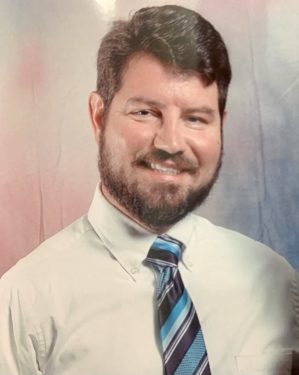
MICHAEL W. COOK is a multi-award-winning author across three genres: philosophy, mythology, and poetry. He won a 2026 Literary Titan Gold Award for Christian nonfiction, 2025 Literary Titan Gold Award for Children’s Books, and 2025 Outstanding Creator Award for Puzzle Books. Previously, he received a Readers' Favorite Gold Medal, Outstanding Creator Award, Firebird Book Award, Literary Titan Book Gold Award, and Literary Titan Book Silver Award. Michael retired as a Major from the United States Air Force, received a Bachelor of Science from the University of Maryland, and earned a Master of Business Administration from the University of Phoenix. He is pursuing a Doctor of Philosophy in Educational Leadership (Ph.D.) from Liberty University. As a history enthusiast who enjoys worldwide travel, he frames his writings of events and ideas in a historical context. Michael is currently working on a semi-autobiographical book entitled “Little Boy on the Bay: Growing up in Downeast Maine."
Reviewed by Jamie Michele for Readers' Favorite
In Michael W. Cook’s Faith in Flux, Cook takes a hard look at what happens when people begin censoring themselves long before anyone openly demands silence. Using Saint Augustine’s attempt to redirect Alypius after public entertainment disrupted his studies, the book follows a larger argument about how education changes once institutions begin rewarding agreement more consistently than independent judgment. Cook connects university culture to military leadership, workplace behavior, public debate, and civic life by examining how quickly honest discussion weakens when people suspect disagreement could damage reputation or future opportunity. As students learn which opinions receive approval from professors or administrators, they also learn whether personal conviction still has value once authority enters the conversation. The book argues that a democratic society depends upon citizens who continue speaking publicly even when social pressure encourages withdrawal, because silence eventually reshapes both education and public life long before formal censorship ever appears.
Michael W. Cook’s Faith in Flux speaks with absolute conviction about leadership as a moral responsibility. He writes with a simple and straightforward directness, addressing ordinary people who find themselves facing real decisions. I was really fascinated by the homing in on the dispute involving Notre Dame professor Tamara Kay and the student newspaper, The Irish Rover, which asks readers to consider how institutions shape public speech. Cook doesn't just talk about issues; he also gives practical tools that readers can apply immediately. For example, when speaking on conflict resolution, Cook points out that repeating another person’s concern aloud is a great way to help restore calm during arguments with relatives or coworkers. Cook links everything to his experiences, particularly with Air Force instruction. That said, the greatest resource is the inclusion of biblical references, from Paul in Athens to the book of James, placing Christian conduct at the center of the book’s message. Readers interested in Christian leadership, education, and public responsibility will find much to value here, as I have. Very highly recommended.