




















This author participates in the Readers' Favorite Free Book Program, which is open to all readers and is completely free. The author will provide you with a free copy of their book in exchange for an honest review. You and the author will discuss what sites you will post your review to and what kind of copy of the book you would like to receive (eBook, PDF, Word, paperback, etc.). To begin, click the purple email icon to send this author a private email.
This author participates in the Readers' Favorite Book Review Exchange Program, which is open to all authors and is completely free. Simply put, you agree to provide an honest review an author's book in exchange for the author doing the same for you. What sites your reviews are posted on (B&N, Amazon, etc.) and whether you send digital (eBook, PDF, Word, etc.) or hard copies of your books to each other for review is up to you. To begin, click the purple email icon to send this author a private email, and be sure to describe your book or include a link to your Readers' Favorite review page or Amazon page.
This author participates in the Readers' Favorite Book Donation Program, which was created to help nonprofit and charitable organizations (schools, libraries, convalescent homes, soldier donation programs, etc.) by providing them with free books and to help authors garner more exposure for their work. This author is willing to donate free copies of their book in exchange for reviews (if circumstances allow) and the knowledge that their book is being read and enjoyed. To begin, click the purple email icon to send this author a private email. Be sure to tell the author who you are, what organization you are with, how many books you need, how they will be used, and the number of reviews, if any, you would be able to provide.

Reviewed by Jamie Michele for Readers' Favorite
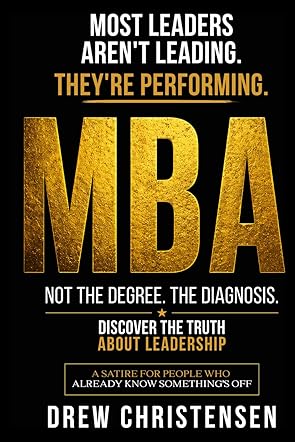
D.M. Christensen uses satire in M.B.A. to examine what happens after entering an MBA program and realizing many professional systems reward appearances more reliably than practical judgment. Classroom discussions about leadership expand into criticism of universities selling prestige while employers treat credentials as proof of capability. Christensen follows students pursuing promotions through expensive programs while questioning whether institutional approval has replaced independent thinking inside modern workplaces. Humor drives the argument through exaggerated examples, exposing how organizations reward people who communicate confidence even when those individuals create confusion or delay decisions. Throughout the book, Christensen argues that people increasingly chase validation from institutions promising status, while practical ability develops only after someone accepts responsibility for choices.
D.M. Christensen’s M.B.A. asks a question plenty of working people already suspect they know the answer to: how much of professional culture is actually about competence, and how much is about appearance, vocabulary, and institutional approval? Christensen approaches that question through satire, but the humor works because the behavior being described feels familiar. Most readers have sat through meetings that solved nothing, listened to corporate language designed to sound important, or watched credentials become shorthand for authority before anyone demonstrated actual ability. Christensen understands the psychology behind that system. People want security. They want advancement. They want proof that their investment in education means something. M.B.A. keeps returning to the uncomfortable gap between professional presentation and practical usefulness. Christensen writes in plain, conversational language that strips management culture of its polished image and forces readers to examine how much of modern office life depends upon performance. What gives the book credibility is that Christensen sounds like somebody who has spent time inside these systems. The economic discussion surrounding higher education, certification culture, and workplace expectations carries the weight of lived observation instead of detached criticism. Recent graduates entering corporate environments will probably recognize these behaviors immediately.