






This author participates in the Readers' Favorite Book Review Exchange Program, which is open to all authors and is completely free. Simply put, you agree to provide an honest review an author's book in exchange for the author doing the same for you. What sites your reviews are posted on (B&N, Amazon, etc.) and whether you send digital (eBook, PDF, Word, etc.) or hard copies of your books to each other for review is up to you. To begin, click the purple email icon to send this author a private email, and be sure to describe your book or include a link to your Readers' Favorite review page or Amazon page.

When I moved to Indonesia more than thirty years ago, I fell in love with its archipelago, its people, and its folk tales. Every island, every village, every tribe I visited had its legends, and they became for me souvenirs of travels in my adopted homeland. But most of the tales, especially when passed on to me orally by natives, were as fragmentary as an Aesop fable. I wanted to ask why a wizard would do this or why a goddess would choose that, but knew that the story-teller would have no way of knowing. When I did dare to be impolite enough to raise such queries, I would usually be told to "believe it or not. It's up to you."
I took on the challenge, and worked to understand characters and deities and the plots of folk tales. I rewrote them with the logic and sometimes the sensibilities and sexualities of contemporary fiction without, I hope, sacrificing the magic and fantasy and exoticism of the originals.
Reviewed by Manik Chaturmutha for Readers' Favorite
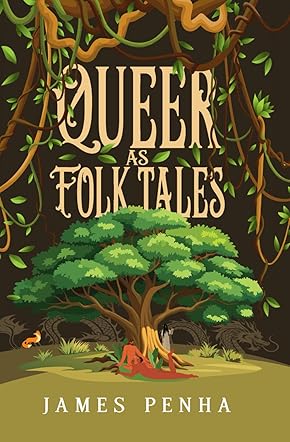
Queer as Folk Tales by James Penha has interconnected and standalone stories that rewrite global folk tales, myths, and original narratives through a queer lens. Spanning Indonesia, China, Norse mythology, and European fairy tales, the book follows characters who move between everyday life and magic as they seek love, belonging, and peace. Lovers escape hostile towns, gods fall for unexpected partners, cursed places wait for release, and ordinary people face memory, guilt, and forgiveness. Familiar legends are reworked, including the Grimm fairy tales, The Aeneid, and regional myths, while original stories mix present-day life with the logic of folklore. Across all twelve stories, queer desire is shown as natural and central, never hidden or treated as a symbol. The collection opens with youthful self-discovery and closes with mature reconciliation, creating a quiet arc about survival, tenderness, and chosen family across time, culture, and mythic space.
Queer as Folk Tales by James Penha reimagines traditional folklore while keeping the sense of wonder that makes these stories timeless. Rather than just placing queer characters into old myths, Penha reshapes their core and suggests these tales always had room for queer lives. The settings move easily from Indonesian villages to mythical courts and enchanted forests, with details that feel lived-in instead of decorative. Characters are clearly shaped and emotionally steady. The plots are often built around moral tests, forgiveness, or choice, and it gives the collection a folk tale rhythm. The writing is simple and easy to read, which lets emotional moments land without too much drama. Penha plays on the phrase “queer as folk” and suggests that queerness is ordinary and timeless, just like folklore itself. What makes this book different from similar retellings is its global reach and emotional depth, moving beyond romance to explore aging, regret, faith, and reconciliation. The collection succeeds in reclaiming myth as a place for queer lives, love, and growing older. This book will appeal to readers drawn to folklore retellings, LGBTQ+ mythic fiction, and literary short stories. It earns five stars for its heart, craft, and quiet originality.