













This author participates in the Readers' Favorite Free Book Program, which is open to all readers and is completely free. The author will provide you with a free copy of their book in exchange for an honest review. You and the author will discuss what sites you will post your review to and what kind of copy of the book you would like to receive (eBook, PDF, Word, paperback, etc.). To begin, click the purple email icon to send this author a private email.
This author participates in the Readers' Favorite Book Review Exchange Program, which is open to all authors and is completely free. Simply put, you agree to provide an honest review an author's book in exchange for the author doing the same for you. What sites your reviews are posted on (B&N, Amazon, etc.) and whether you send digital (eBook, PDF, Word, etc.) or hard copies of your books to each other for review is up to you. To begin, click the purple email icon to send this author a private email, and be sure to describe your book or include a link to your Readers' Favorite review page or Amazon page.
This author participates in the Readers' Favorite Book Donation Program, which was created to help nonprofit and charitable organizations (schools, libraries, convalescent homes, soldier donation programs, etc.) by providing them with free books and to help authors garner more exposure for their work. This author is willing to donate free copies of their book in exchange for reviews (if circumstances allow) and the knowledge that their book is being read and enjoyed. To begin, click the purple email icon to send this author a private email. Be sure to tell the author who you are, what organization you are with, how many books you need, how they will be used, and the number of reviews, if any, you would be able to provide.

Reviewed by Asher Syed for Readers' Favorite
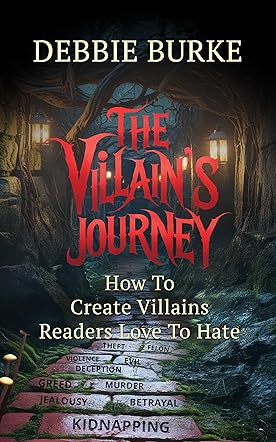
The Villain's Journey: How to Create Villains Readers Love to Hate by Debbie Burke examines antagonists as the initiating force of the plot and argues that effective stories require a detailed understanding of their villain. Burke tells us that focusing solely on protagonists produces inactive opposition and logical gaps, while tracking the villain’s objectives and offstage behavior sustains causality across scenes. Drawing on research and references, Burke situates villains as threat models that prompt response and problem solving. Burke breaks down mystery, suspense, and thriller through the timing of revelation, and how genre molds the presentation of viewpoint. She also talks about non-malicious antagonists and parallel journeys adapted from The Hero's Journey. Alongside all of this, Burke offers worksheets, archetypes, timeline, and other methods for planning.
The Villain's Journey by Debbie Burke is a wonderfully comprehensive and methodical guide for writers who want antagonists that actively drive story action. Burke grounds her advice in scholarship and publishing experience, and breaks down almost every conceivable angle and shape an antagonist can take. Her style of writing is conversational and easy to follow, and I love how she moves between theory and application, showing how belief systems, social pressure, trauma, and power affect harmful behavior across genres. Perhaps the most eye-opening part for me is the attention to female villains, and correcting long standing habits that sideline or excuse their actions. I hadn't realized the sheer volume of cliches around gendered antagonists, and am grateful to see it now. Planning exercises and dual timelines translate ideas into daily writing practice. Overall, this is the perfect guide. Very highly recommended.