





















This author participates in the Readers' Favorite Free Book Program, which is open to all readers and is completely free. The author will provide you with a free copy of their book in exchange for an honest review. You and the author will discuss what sites you will post your review to and what kind of copy of the book you would like to receive (eBook, PDF, Word, paperback, etc.). To begin, click the purple email icon to send this author a private email.
This author participates in the Readers' Favorite Book Review Exchange Program, which is open to all authors and is completely free. Simply put, you agree to provide an honest review an author's book in exchange for the author doing the same for you. What sites your reviews are posted on (B&N, Amazon, etc.) and whether you send digital (eBook, PDF, Word, etc.) or hard copies of your books to each other for review is up to you. To begin, click the purple email icon to send this author a private email, and be sure to describe your book or include a link to your Readers' Favorite review page or Amazon page.
This author participates in the Readers' Favorite Book Donation Program, which was created to help nonprofit and charitable organizations (schools, libraries, convalescent homes, soldier donation programs, etc.) by providing them with free books and to help authors garner more exposure for their work. This author is willing to donate free copies of their book in exchange for reviews (if circumstances allow) and the knowledge that their book is being read and enjoyed. To begin, click the purple email icon to send this author a private email. Be sure to tell the author who you are, what organization you are with, how many books you need, how they will be used, and the number of reviews, if any, you would be able to provide.
Reviewed by Asher Syed for Readers' Favorite
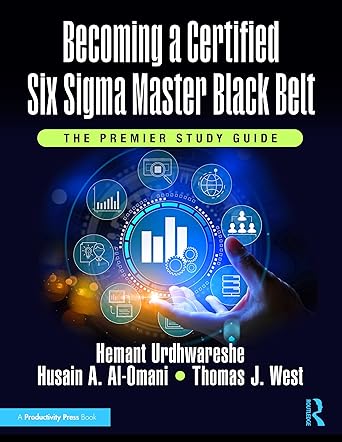
Becoming a Certified Six Sigma Master Black Belt by Hemant Urdhwareshe, Husain A. Al-Omani, and Thomas J. West explains how organizations convert strategic direction into measurable operational improvement through the leadership of a Master Black Belt who connects executive objectives with project execution. The book describes how this role guides improvement initiatives so organizational goals translate into structured projects that evaluate performance gaps and implement verified process changes. Through applied organizational examples, the authors show how disciplined measurement supports decisions about operational performance while governance systems monitor results during execution of improvement work. The text also shows how improvement leaders coordinate teams during structured projects that transform strategic direction into sustained operational performance. By presenting the responsibilities and practices associated with this role, the book introduces the knowledge required for professionals preparing to lead organizational improvement initiatives.
In Becoming a Certified Six Sigma Master Black Belt, Hemant Urdhwareshe, Husain A. Al-Omani, and Thomas J. West discuss the highest level of certification in data-driven quality improvement. Now let’s just slow this down and talk about what Six Sigma actually means in everyday work. It is a structured method where a team measures performance, studies the root cause of mistakes, and then implements changes that keep the results consistent across future operations. A Black Belt is a professional trained to lead those improvement projects inside an organization while guiding teams through the process step by step. This matters today because executives want proof that improvement work actually changes cost, time, or reliability in measurable terms. The book effectively links improvement projects to company strategy, formal review meetings, and careful project selection so the work stays tied directly to business direction—not just as a how, but a why. The book is content and context-heavy, and academic in style, speaking mainly to professionals already working in operations or quality management roles. The guide draws heavily on research and professional practice through statistical analysis methods, financial evaluation tools, and coaching approaches used when experienced specialists train new improvement leaders inside an organization. Recommended.