Reviewed by Eric Ferrar for Readers' Favorite
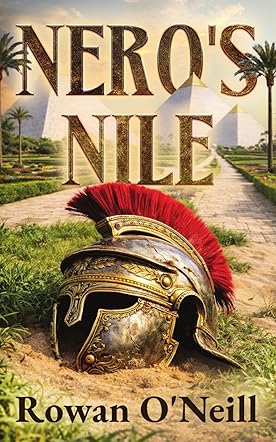
In Nero's Nile by Rowan O'Neill, the story starts with a brutal bang in 60 AD Britannia. General Titus Statilius Taurus pulls off the daring assassination of Queen Boudicca to end a tribal revolt, hoping he'll finally be able to settle down on his farm. Instead, he's dragged back to Rome by Emperor Nero, a ruler who is quickly losing his grip on reality while his (Nero's) mother, Agrippina, poisons anyone standing in their way. Nero is obsessed with his legacy and forces Titus to lead a group of Praetorians into uncharted Africa to find the source of the Nile. The mission feels like a suicide run. Titus is caught between a lethal political collapse in Rome and an expedition that spirals into pure horror, marked by body possession, cryptic visions, and the interference of menacing Egyptian gods. Can he find the river's headwaters and survive the ancient, dormant powers waking up in the dark, or is he just another sacrifice to Nero's ego?
Rowan O’Neill’s Nero's Nile is a haunting work of historical fiction with a lethal, horror-tinged edge. It's a dark, atmospheric read that managed to get under my skin in a way few historical novels do. The story gallops through the political minefields of the Julio-Claudian dynasty before plunging into a landscape of choking silt and dormant powers. O’Neill skips the museum-piece formality, treating the past like a fresh wound where characters breathe, bleed, and break with startling realism. The prose is so visceral you can virtually feel the midday sun and the bite of Praetorian steel. Moving from a grounded military chronicle into a horror-tinged nightmare takes a steady hand, and here, that sudden pivot feels completely inevitable. I was really impressed by how the book treats the Nile itself as a living, breathing antagonist that watches the expedition with a cold, ancient eye. It’s a haunting experience that leaves you thinking about the price of legacy and the terrifying reality of what happens when the light of civilization hits a wall of absolute darkness. If you’re a fan of stories where the hard facts of history collide with something much more primal and disturbing, this is one book you shouldn't skip.