













This author participates in the Readers' Favorite Free Book Program, which is open to all readers and is completely free. The author will provide you with a free copy of their book in exchange for an honest review. You and the author will discuss what sites you will post your review to and what kind of copy of the book you would like to receive (eBook, PDF, Word, paperback, etc.). To begin, click the purple email icon to send this author a private email.
This author participates in the Readers' Favorite Book Review Exchange Program, which is open to all authors and is completely free. Simply put, you agree to provide an honest review an author's book in exchange for the author doing the same for you. What sites your reviews are posted on (B&N, Amazon, etc.) and whether you send digital (eBook, PDF, Word, etc.) or hard copies of your books to each other for review is up to you. To begin, click the purple email icon to send this author a private email, and be sure to describe your book or include a link to your Readers' Favorite review page or Amazon page.
This author participates in the Readers' Favorite Book Donation Program, which was created to help nonprofit and charitable organizations (schools, libraries, convalescent homes, soldier donation programs, etc.) by providing them with free books and to help authors garner more exposure for their work. This author is willing to donate free copies of their book in exchange for reviews (if circumstances allow) and the knowledge that their book is being read and enjoyed. To begin, click the purple email icon to send this author a private email. Be sure to tell the author who you are, what organization you are with, how many books you need, how they will be used, and the number of reviews, if any, you would be able to provide.

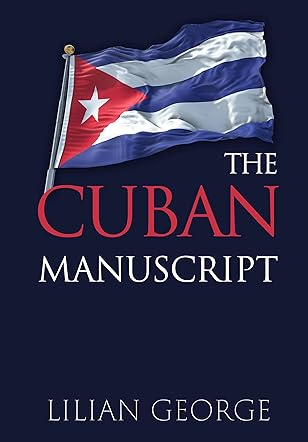
Lilian George was born in Eastern Europe. After making America her new home, she draws from the shadows of lived history to explore the fragile line between promised paradise and lived nightmare.
The Cuban Manuscript is her debut novel — a haunting journey through two communist regimes a thousand miles apart, where survival becomes the ultimate act of defiance.
She writes to remind a new generation that freedom is never guaranteed.
She is currently working on two new books
Reviewed by Richard Prause for Readers' Favorite
In The Cuban Manuscript, Lilian George tracks the life of Liana, a woman who escapes one suffocating communist regime only to find herself trapped in another one just like it. She starts in a Soviet-controlled country where her family’s property is taken away from them by the state, and her childhood is spent doing forced labor. There’s a lot of talk about equality, but she sees firsthand that it’s all a lie—the Party leaders live very lavish lifestyles while her family is lucky to get meat that hasn't gone bad. Things take a turn when they move to Cuba, hoping for a better life. Unfortunately, they encounter the same rationing challenges and nationwide control, but with more sun and dust this time. They quickly discover that Fidel Castro’s revolution is just the same old oppression wearing a different guise, where state watchdogs manage every street corner. Liana’s daughter, Alina, eventually witnesses these struggles too, watching her mother navigate a life where even a neighbor might be an informant. From beginning to end, Liana’s incredible journey poses an important question. Can someone ever truly escape a system that is really created to control them?
The Cuban Manuscript by Lilian George is a blunt historical and political drama that doesn't waste time with poetic filler. George focuses on the concrete details of Liana's daily life, like the lack of medical care, the meager food her family receives, and the constant threat of being purged if you say the wrong thing. I think the chapters surrounding the systemic abuse Liana faced are the most difficult yet compelling moments of the book. They really helped to show the lack of protection for women in these kinds of regimes. The world-building is captivating because it’s based on real-world history, making the stakes feel much higher than your average drama or thriller. The Cuban Manuscript isn't a gentle or cozy read, but it’s a gripping one that kept me turning the pages to see if Liana would ever outrun the system. It’s an intense story that definitely makes you value the things you usually take for granted. If you want to understand the reality behind most political slogans, you should read this novel.