





















This author participates in the Readers' Favorite Free Book Program, which is open to all readers and is completely free. The author will provide you with a free copy of their book in exchange for an honest review. You and the author will discuss what sites you will post your review to and what kind of copy of the book you would like to receive (eBook, PDF, Word, paperback, etc.). To begin, click the purple email icon to send this author a private email.
This author participates in the Readers' Favorite Book Review Exchange Program, which is open to all authors and is completely free. Simply put, you agree to provide an honest review an author's book in exchange for the author doing the same for you. What sites your reviews are posted on (B&N, Amazon, etc.) and whether you send digital (eBook, PDF, Word, etc.) or hard copies of your books to each other for review is up to you. To begin, click the purple email icon to send this author a private email, and be sure to describe your book or include a link to your Readers' Favorite review page or Amazon page.
This author participates in the Readers' Favorite Book Donation Program, which was created to help nonprofit and charitable organizations (schools, libraries, convalescent homes, soldier donation programs, etc.) by providing them with free books and to help authors garner more exposure for their work. This author is willing to donate free copies of their book in exchange for reviews (if circumstances allow) and the knowledge that their book is being read and enjoyed. To begin, click the purple email icon to send this author a private email. Be sure to tell the author who you are, what organization you are with, how many books you need, how they will be used, and the number of reviews, if any, you would be able to provide.
Reviewed by Asher Syed for Readers' Favorite
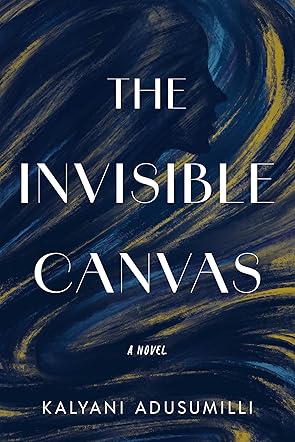
Kalyani Adusumilli’s The Invisible Canvas begins in the throes of a medical emergency caused by an overdose, where Jansi, a wife and mother living in Texas, is admitted to a psychiatric facility for evaluation and treatment. What begins as a brief hospitalization becomes an extended stay in which doctors determine that her collapse did not arise from a single night, but from years of accumulated strain. Jansi's intensive work with a psychologist digs up a slew of memories from her childhood in India, where she was raised by relatives before she ultimately joined her parents in the United States. This then triggers a revelation of strict expectations at home, the sudden death of her accomplished older sister, and a long-buried experience of sexual abuse by a trusted family member. While her husband cares for their two sons, Jansi confronts the silence surrounding her past and the pressures that shaped her adulthood, forcing her to decide whether she will continue enduring in private or speak openly about what happened to her.
Kalyani Adusumilli’s The Invisible Canvas is a contemporary literary novel linked to buried trauma and family history. The author does an excellent job with the delicate balance of compassionate affirmation and the realities of a mental health crisis. There is a heartbreaking scene where the dismissiveness of addressing childhood abuse is seen as commonplace in large families, and that landed like a gut-punch. It is horrible, in equal measure with how superbly raw and honest it is, especially when looking straight into the face of cultural shame that is pervasive. Jansi is a woman with a strong arc, and she grows from a broken individual on a stretcher to someone on the cusp of choosing truth over systemic silence. I also loved Neela, Jansi’s cousin and confidante. The settings are extremely realistic, from the monitored psychiatric unit with inspections and constant observation, to the crowded ghats of the Ganges. Overall, this is a beautiful novel for readers interested in diaspora family stories and candid portrayals of recovery shaped by culture and memory. Recommended.