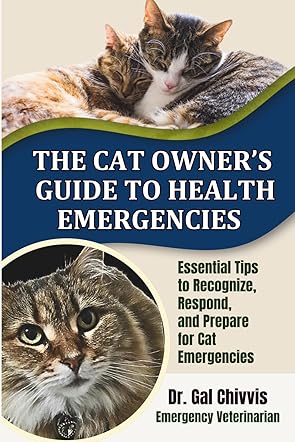




















The Cat Owner's Guide to Health Emergencies

Essential Tips to Recognize, Respond and Prepare for Cat Emergencies

Non-Fiction - Animals
195 Pages
Reviewed on 02/14/2026
Buy on Amazon

This author participates in the Readers' Favorite Free Book Program, which is open to all readers and is completely free. The author will provide you with a free copy of their book in exchange for an honest review. You and the author will discuss what sites you will post your review to and what kind of copy of the book you would like to receive (eBook, PDF, Word, paperback, etc.). To begin, click the purple email icon to send this author a private email.

This author participates in the Readers' Favorite Book Review Exchange Program, which is open to all authors and is completely free. Simply put, you agree to provide an honest review an author's book in exchange for the author doing the same for you. What sites your reviews are posted on (B&N, Amazon, etc.) and whether you send digital (eBook, PDF, Word, etc.) or hard copies of your books to each other for review is up to you. To begin, click the purple email icon to send this author a private email, and be sure to describe your book or include a link to your Readers' Favorite review page or Amazon page.

This author participates in the Readers' Favorite Book Donation Program, which was created to help nonprofit and charitable organizations (schools, libraries, convalescent homes, soldier donation programs, etc.) by providing them with free books and to help authors garner more exposure for their work. This author is willing to donate free copies of their book in exchange for reviews (if circumstances allow) and the knowledge that their book is being read and enjoyed. To begin, click the purple email icon to send this author a private email. Be sure to tell the author who you are, what organization you are with, how many books you need, how they will be used, and the number of reviews, if any, you would be able to provide.

    Book Review

Reviewed by Asher Syed for Readers' Favorite

The Cat Owner's Guide to Health Emergencies by Dr. Gal Chivvis presents feline emergency care as a matter of owners' readiness, recognition, and timely action, explaining that cats often mask an illness until their health is impaired. Chivvis teaches us how a crisis will usually follow the subtle changes that went unnoticed, and that the sooner any abnormal patterns are identified, the quicker we can get appropriate professional care. Chivvis talks about the everyday responsibility of preparedness, from planning for transport to after-hours access when routine clinics are unavailable. The author cautions against human medications, even when attempting to decontaminate an animal from toxic exposure. With helpful contact information and resources, Chivvis gives us a book to help us know what to do when our feline family members need us most.

Dr. Gal Chivvis’s The Cat Owner’s Guide to Health Emergencies: Essential Tips to Recognize, Respond, and Prepare for Cat Emergencies is a brilliant manual that I am so glad to have in my arsenal. It is packed full of information I did not know and was totally unprepared for. Chivvis uses a writing style that is approachable, mercifully free of excessive jargon, and in how clinical reasoning is translated. At some point, our cats are going to walk into the room with an illness or injury, and these are the scenarios where this guide will be great for the back pocket. That said, Chivvis also covers extreme emergencies. I got a little choked up during the detailed discussion of feline cardiopulmonary resuscitation outcomes and realistic survival expectations. Overall, this is the perfect book for cat owners, foster volunteers, petsitters, and veterinary-curious readers who want actionable guidance. Very highly recommended.

Carol Thompson

The Cat Owner’s Guide to Health Emergencies by Dr. Gal Chivvis, DVM, is a practical resource that helps cat owners recognize urgent medical situations before they become crises. Because cats often hide their discomfort, the book focuses on subtle changes in their behavior, appetite, breathing, or movement that may signal a serious problem. Dr. Chivvis outlines the most common feline emergencies and toxic exposures, giving readers a clear sense of which conditions require immediate veterinary care and which steps can be taken at home before seeking professional help. The guide emphasizes calm observation and structured assessment, helping owners feel less overwhelmed when something seems wrong. In addition to emergency scenarios, the book includes useful tools such as first-aid supply recommendations, medical authorization forms, and quick-reference charts for common situations. The overall message is that preparation and awareness can make a meaningful difference when time matters.

The writing is straightforward, organized, and grounded in real emergency medicine experience. The pacing is efficient, moving through topics in a clear, reference-friendly way that makes it easy to return to during stressful moments. Dr. Gal Chivvis balances her professional expertise with an understanding of how frightening uncertainty can be for pet owners, creating a steady, reassuring tone. Readers will appreciate the step-by-step approach, the helpful charts and images, the emphasis on prevention, and the practical checklists that translate medical knowledge into everyday preparedness. This book will especially appeal to new cat owners and longtime caregivers seeking a dependable home resource. It is well-suited for anyone who wants to feel more equipped to respond thoughtfully and quickly when a beloved cat’s health changes unexpectedly. The Cat Owner’s Guide to Health Emergencies should be in every feline's home.

Leonard Smuts

Emergencies involving pet cats require an immediate response. Dr. Gal Chivvis, DVM, describes how to identify what is amiss and recommends appropriate action in The Cat Owner's Guide to Health Emergencies. It all begins with preparation, from keeping a well-equipped first aid kit and having the cat’s medical history available for the veterinarian, to pet insurance, pet travel arrangements, and notes for caregivers while the owner is away. Planning should include having the telephone numbers of the veterinarian and nearby emergency facilities readily available. Owners should have a secure pet carrier at the ready in case transportation is needed. Ten common emergencies are described, with advice on how to handle them. Common symptoms are evaluated, along with the likely diagnosis, treatment, interventions, and prevention. The author advocates regular examinations and vaccination, and avoiding pet obesity, while encouraging activity and movement, backed up with healthy nutrition and hydration. There are guidelines on pet-proofing the home, and notes on medication and care, noting that dog and cat products are not interchangeable.

Dr. Gal Chivvis is an experienced emergency veterinarian and has also authored The Dog Owner's Guide to Health Emergencies. She provides an extensive tool kit that includes tips on how to monitor your cat’s health in the home. The types of cats most susceptible to particular ailments provide additional clues. When in doubt, always seek professional advice. Other quick reference lists that stand out include ten common toxicities, which include a few surprises and features common to household substances. The writing style is concise, and the presentation is excellent, with informative tables, flow charts, and appropriate illustrations. A list of references and additional resources rounds off an outstanding publication that will be a useful addition to any cat lover’s shelf. As a cat owner, I am delighted to recommend The Cat Owner's Guide to Health Emergencies to prospective readers.