
















This author participates in the Readers' Favorite Free Book Program, which is open to all readers and is completely free. The author will provide you with a free copy of their book in exchange for an honest review. You and the author will discuss what sites you will post your review to and what kind of copy of the book you would like to receive (eBook, PDF, Word, paperback, etc.). To begin, click the purple email icon to send this author a private email.
This author participates in the Readers' Favorite Book Review Exchange Program, which is open to all authors and is completely free. Simply put, you agree to provide an honest review an author's book in exchange for the author doing the same for you. What sites your reviews are posted on (B&N, Amazon, etc.) and whether you send digital (eBook, PDF, Word, etc.) or hard copies of your books to each other for review is up to you. To begin, click the purple email icon to send this author a private email, and be sure to describe your book or include a link to your Readers' Favorite review page or Amazon page.
This author participates in the Readers' Favorite Book Donation Program, which was created to help nonprofit and charitable organizations (schools, libraries, convalescent homes, soldier donation programs, etc.) by providing them with free books and to help authors garner more exposure for their work. This author is willing to donate free copies of their book in exchange for reviews (if circumstances allow) and the knowledge that their book is being read and enjoyed. To begin, click the purple email icon to send this author a private email. Be sure to tell the author who you are, what organization you are with, how many books you need, how they will be used, and the number of reviews, if any, you would be able to provide.
Reviewed by Asher Syed for Readers' Favorite
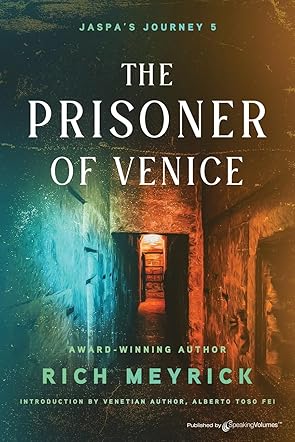
In Rich Meyrick’s The Prisoner of Venice, Ernest, a tiny animal-being known as a Ses, who belongs to London’s Pride, disappears after receiving a forged message that sends him to Venice on a secret assignment. His friend Jaspa, the primary protagonist, leads a small group of Pride members to Italy, where their search points toward a pattern of Ses vanishings that has frightened the local community into silence. Unknown to them, Ernest is being held inside the Doge’s Palace by the Ses Scuola Grande, a secret organization whose leaders keep control over its members by separating them from people they care about. As Jaspa follows the clues through Venice, Ernest begins learning how the Scuola operates and looks for a way out before those holding him discover how much he knows.
Rich Meyrick’s The Prisoner of Venice is excellent fantasy mystery fiction, with the author building its central investigation around a miniature society hidden inside the human world. The author gives the cast strong individuality, and while we know Jaspa from previous books, wonderful attention is paid elsewhere too. Albertee, an Otterses whose Venetian storytelling brings local history naturally into conversations with the visiting Ses, is amazing, and Bisckits responds to the stories with real enthusiasm, giving their exchanges an easy chemistry. Venice is used superbly, since ordinary landmarks become enormous physical environments for characters under ten centimeters tall. At St. Mark’s Square, the crowds themselves create danger simply through scale. The author keeps the mystery moving as discoveries alter what the characters understand, with later clues connecting earlier details in satisfying ways. This is a five-star fifth book in the Jaspa's Journey series, and very highly recommended.